Home energy tax credits after 2025: what ended, what you can still claim and the help that remains
The federal credits for heat pumps, insulation, windows and rooftop solar do not cover work done in 2026. Homeowners still have a few ways to benefit, plus state rebates and weatherization help.
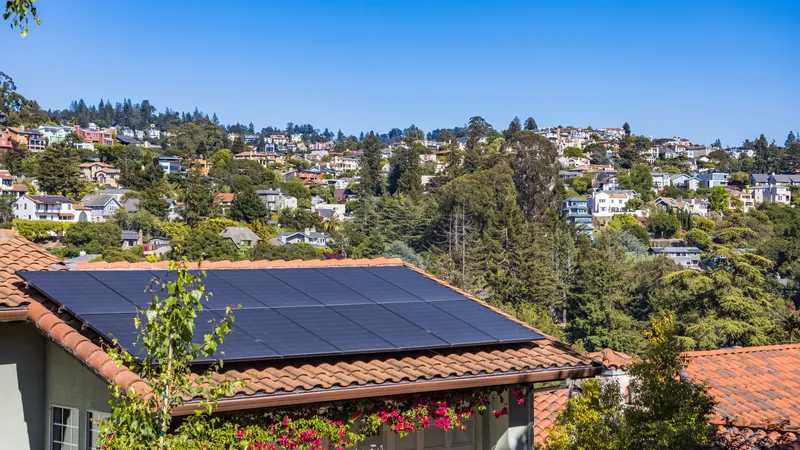
Two federal tax credits that helped homeowners pay for heat pumps, insulation, energy-efficient windows and rooftop solar no longer cover new projects. Under Public Law 119-21, signed July 4, 2025, and commonly known as the One, Big, Beautiful Bill, the Energy Efficient Home Improvement Credit is not allowed for property placed in service after Dec. 31, 2025, and the Residential Clean Energy Credit is not allowed for expenditures made after Dec. 31, 2025, according to the IRS's fact sheet FS-2025-05, issued Aug. 21, 2025.
That means work finished in 2026 does not qualify for either credit. Here is what homeowners can still do.
What ended, and the timing rule that matters
The Energy Efficient Home Improvement Credit, known by its tax code section, 25C, covered items such as insulation, exterior doors and windows, heat pumps, water heaters and home energy audits. The Residential Clean Energy Credit, section 25D, covered systems such as solar electric panels, solar water heaters, wind turbines, geothermal heat pumps, fuel cells and battery storage.
For 25D, timing turns on installation, not payment. The IRS says an expenditure is treated as made when the original installation is completed. If installation was completed after Dec. 31, 2025, the expenditure counts as made after that date, and the credit is not available. For a newly built or rebuilt home, the expenditure is treated as made when you begin using the home.
Hypothetical example: a homeowner signed a solar contract and paid a deposit in November 2025, but the installer finished the system in February 2026. Under the IRS rule, that system would not qualify for the 25D credit.
The same law also ended the alternative fuel vehicle refueling property credit, section 30C, which homeowners in eligible low-income or non-urban census tracts could use for charging equipment at a main home. It is not allowed for property placed in service after June 30, 2026, according to the IRS fact sheet.
What you can still claim
Work completed in 2025
Qualifying projects placed in service in 2025 can still be claimed on a 2025 federal return using Form 5695, Residential Energy Credits. According to the IRS pages for the home improvement credit and the clean energy credit:
- 25C equals 30% of qualified costs, generally capped at $1,200 a year, with a separate $2,000 annual limit for qualified heat pumps, heat pump water heaters and biomass stoves or boilers. For property placed in service in 2025, the IRS says you must report the item's qualified manufacturer identification number, or QMID, on your return. Insulation and air sealing materials are exempt from that requirement.
- 25D equals 30% of the cost of qualified clean energy property, with no annual maximum. It is nonrefundable, so it cannot exceed the tax you owe.
If you filed for an extension on your 2025 return, the deadline to file is Oct. 15, the IRS noted in an August reminder.
Credits you missed in earlier years
The 30% versions of the credits applied to 2023 through 2025 for 25C and 2022 through 2025 for 25D. If you qualified but did not claim a credit, you may be able to file an amended return. The IRS says that, generally, to claim a refund you must file an amended return within three years after the date you filed the original return or two years after the date you paid the tax, whichever is later. See the IRS page on filing an amended return.
25D carryforwards
If your 25D credit was larger than your tax bill, the IRS says you can carry the unused amount forward to reduce tax in future years. The draft instructions for the 2026 Form 5695 say the form can be used to take a residential clean energy credit carryforward from 2025 or to carry the unused portion to 2027, and that you may claim only a carryforward of unused credit.
Other help that remains
- Home Energy Rebates. These rebate programs are run by states, territories and tribes with federal funds, not through your tax return. The Department of Energy's program page says the Home Owner Managing Energy Savings rebates offer up to $8,000 for whole-home upgrades with at least 20% modeled energy savings, and the High-Efficiency Electric Home Rebate program offers up to $14,000 for efficient electric upgrades. The DOE says the rebates are available in select states and suggests contacting your state or territory energy office about status and eligibility.
- Weatherization Assistance Program. This DOE program pays for efficiency improvements for income-eligible homeowners and renters. Households at or below 200% of the federal poverty guidelines or receiving Supplemental Security Income are generally eligible, and states may use LIHEAP's limit of 60% of state median income instead, according to the DOE's application page.
- LIHEAP. The Low Income Home Energy Assistance Program can help with energy bills, weatherization and minor energy-related home repairs. Visit energyhelp.us or call 1-866-674-6327.
- Your utility and state. Ask your electric or gas utility and your state energy office whether they offer rebates, low-interest loans or free home energy assessments.
Before you file or start a project
Keep invoices showing what was installed and when it was completed, since installation dates now decide eligibility. Tax situations vary, and this article is not tax advice. Check the IRS pages linked here or talk with a tax professional about your return, and confirm rebate rules with your state before you sign a contract.
Sources
- IRS: FAQs for modification of sections 25C, 25D, 25E, 30C, 30D, 45L, 45W, and 179D under Public Law 119-21 (FS-2025-05)
- IRS: Energy Efficient Home Improvement Credit
- IRS: Residential Clean Energy Credit
- IRS: Draft 2026 Instructions for Form 5695
- U.S. Department of Energy: Home Energy Rebates Program
- U.S. Department of Energy: How to Apply for Weatherization Assistance
Article Was Generated By AI. It was researched against the official sources listed above. This article is general information, not financial, legal or medical advice. Spotted an error? Email info@thechopshop.click.